Signs old attic insulation should come out
Discover the signs that tell you when attic insulation removal is necessary and when you can simply add a new layer over the top of the old material.
- Section by Paxton Ouellette
- 6 min. reading
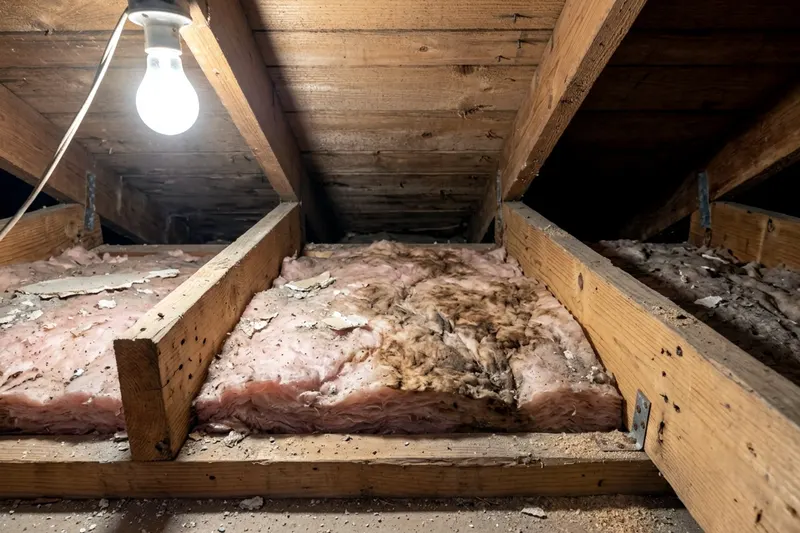
Old attic insulation may need to come out if it is wet, moldy, filled with rodent waste, or suspected of containing asbestos. If the existing material is dry and clean, you may be able to skip insulation removal and add new insulation over the old layer once a pro confirms it is sound.
When to top up and when to tear out
Many homeowners shine a light into the attic, see flat and dusty material between the joists, and assume it all has to go. That is often not the case. Many older homes have thin insulation that may have settled over time, since cellulose and fiberglass can compress and lose some of their trapped air.
As long as the old material is completely dry and free of pests, it still holds some thermal value. You just need more of it. Leaving the old layer in place saves labor. A contractor can blow new loose fill material right over the existing floor to reach the R-value your local code requires.
If the existing insulation sits level with or below the top of the joists, a pro can cover the wood framing with new loose fill too, which cuts heat loss through the joists.
Pulling everything out to the bare drywall is usually reserved for severely damaged insulation. Wet insulation can hold moisture against the wood framing.
Water stains and roof leaks
Water is a major problem for attic insulation. A small roof leak from an ice dam or a torn shingle might drip onto the attic floor for an entire season before it stains the ceiling drywall inside the house. Water can collapse the small air pockets that make insulation work.
Wet fiberglass batts can mat down and lose thermal resistance, and wet cellulose can clump. Insulation that has been soaked often stays flattened even after the leak is fixed.
The EPA Energy Star program advises bringing in a contractor before insulating if attic insulation is wet or damp from a leaky roof. Repair the failing shingles or replace the rotting roof decking first.
Wet insulation can hold moisture against the structural framing, and prolonged dampness can damage the joists, trusses and ceiling drywall. Waterlogged material generally needs to come out, and the open joist bays should be dry before new insulation goes in, so ask a licensed pro how long to allow.
Mold and trapped moisture
Roofs do not always leak from the outside. Sometimes the destructive moisture comes directly from the rooms below. Bathroom exhaust fans and dryer vents that end inside the attic can pump humid air into it, so ask a licensed pro how your vents should be routed.
In winter, that humid air can condense on the cold underside of the roof deck and drip onto the insulation below, and poor ventilation lets damp air linger.
Constant dampness can feed mold on the wood framing and inside the insulation itself. Moldy insulation generally should not be covered with fresh material, so ask a licensed pro how to handle it.
Once the bays are empty, a remediation crew can clean and treat the wood. The moisture source, such as a misrouted exhaust duct or blocked soffit vents, should also be fixed before you schedule new insulation.
Rodent nests and contamination
Attics provide a warm, quiet shelter for mice, rats, squirrels, and raccoons. These animals find easy paths through broken soffit vents or loose exterior fascia boards. Once inside, they tear up fiberglass batts and burrow deep into cellulose piles to build nests.
Pests leave behind a trail of urine, feces, and food waste. This contamination can make your insulation a health hazard. Mice and other animals can tunnel through loose fill and pack it down, and raccoons may soil one corner of an attic, soaking the insulation and the drywall below.
Air flowing through the attic can carry odors and airborne particles down through gaps around light fixtures into your living space. If you shine a flashlight across the attic floor and see tunnels, matted spots, or dark droppings, the old material likely needs to come out.
You need to hire a professional insulation removal service. A good contractor clears out the waste without spreading it through the house, and the entry holes should be sealed before fresh material goes in.
Vermiculite needs professional asbestos abatement
Some older homes have vermiculite insulation, which needs special care. The EPA describes vermiculite insulation as a pebble like, pour in product that is usually gray brown or silver gold. It is poured in, so it may sit loose between the ceiling joists.

This material may contain asbestos. The EPA says a mine near Libby, Montana supplied over 70 percent of all vermiculite sold in the United States from 1919 to 1990. The vermiculite from that mine was contaminated with asbestos.
Because any disturbance could release asbestos fibers, the EPA says to assume vermiculite insulation contains asbestos, not to disturb it, and to use a trained professional if it must be removed. Asbestos fibers can harm health when they become airborne and are inhaled.
If you see shiny, gray brown pebbles in an attic, stop and leave them alone. Do not sweep them, vacuum them or walk on them, and do not lift other insulation to look underneath. Treat them as asbestos containing and call a trained professional.
The EPA advises against storing boxes or other items in an attic that contains vermiculite insulation. Moving things around can disturb the material. Before a remodel or new wiring in that attic, hire a trained professional asbestos contractor, and ask your local building department about rules where you live.
How an insulation contractor clears the space
Clearing an attic is dirty, exhausting work. It is rarely a smart weekend project for a homeowner. Scooping up old cellulose with a dustpan kicks heavy dust into the tight space. Dragging dirty fiberglass batts down the hallway drops debris onto your carpets and spreads allergens through the house.
Many insulation removal contractors work from outside, using a truck-mounted vacuum and a long hose run into the attic. The machine stays outside, so most of the dust and debris goes into filter bags in the truck.
The crew works methodically across the attic floor. They vacuum up old loose fill, rodent droppings, and decades of dirt. If you have old fiberglass batts, they roll them up and pack them into thick plastic contractor bags in the attic before carrying them out. They leave the ceiling drywall bare and clean.
Finding hidden issues before replacement
Once the old insulation is gone, you finally get a clear look at the bones of your house. The bare ceiling drywall and exposed top plates tell the true story of how your home performs. Many older homes leak conditioned air into the attic through small gaps.
Every wire that passes through the top plate of a wall creates a small hole. Every ceiling light box creates a break in the drywall. Plumbers often cut oversized holes to run vent pipes up through the framing. Together these gaps can add up to a lot of lost heat.
With the joist bays empty, you can see the penetrations that need air sealing. Ask a licensed pro which sealing materials suit each gap, especially near chimneys and hot vent pipes.
You can also inspect the structural framing properly. Look for cracked joists, water stains on the sill plates, or missing hardware. A licensed electrician can check old electrical wires, and you can figure out if you need a vapor barrier.
Cross references
 Calling a Pro
Which home projects need a building permit and which do not
Find out exactly what your city building department does, which home projects require a permit, and the small repairs you can do without permission.
 Calling a Pro
8 things a structural engineer checks in a foundation inspection
A foundation inspection home visit by a structural engineer checks wall cracks, floor levels and framing to give you an independent repair plan.